
Piece retortowe z zimnymi ścianami o temperaturze pracy do 2400 °C lub 3000 °C
Doskonale nadają się one do różnorodnych procesów obróbki cieplnej wymagających zdefiniowanej atmosfery gazu osłonowego lub reakcyjnego.

Piece retortowe z zimnymi ścianami o temperaturze pracy do 2400 °C lub 3000 °C




FAQ About Cold-Wall Retort Furnaces
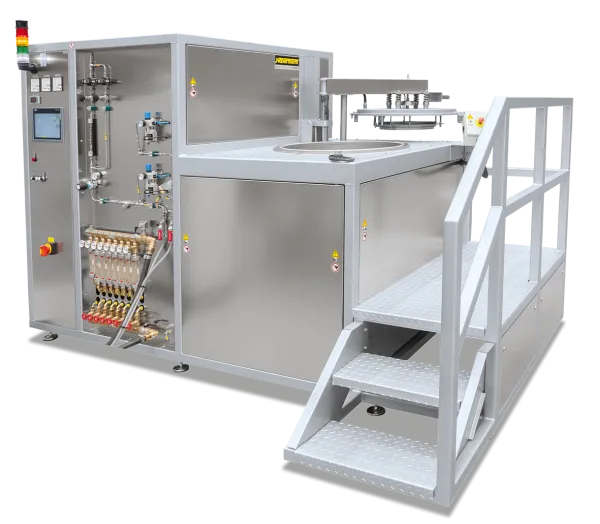
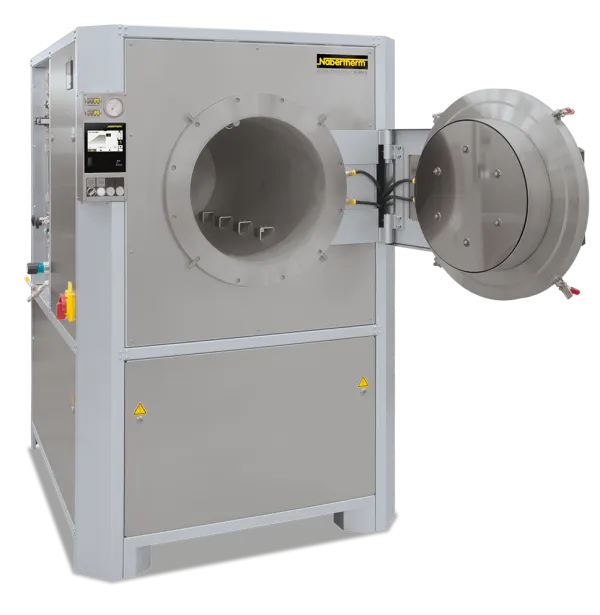
The VHT series cold-wall retort furnaces are high-temperature furnaces designed for heat treatment processes under protective gas, reactive gas, or vacuum. They are particularly suitable for demanding applications in research, development, and industrial production.
Nabertherm cold-wall retort furnaces of series VHT are used in a wide range of applications, including:
Sintering
Debinding
Heat treatment of metals
Brazing
Annealing
Ceramic and powder metallurgy processes
High-temperature vacuum processes
Processes under hydrogen or protective gas atmospheres
Research and materials development
Depending on the furnace configuration, temperatures of up to 2400 °C can be achieved. The available temperature range depends on the selected heating system:
- Graphite heating: up to 2400 °C
- Molybdenum heating: up to 1600 °C
- Tungsten heating: up to 1800 °C
- MoSi₂ heating elements: up to 1800 °C
For applications requiring even higher temperatures, Nabertherm offers the SVHT pit-type furnace series, which reaches maximum temperatures of up to 3000 °C with graphite heating and up to 2400 °C with tungsten heating.
The VHT series offers several heating concepts to meet different process requirements:
- Graphite heating elements for the highest operating temperatures
- Molybdenum and tungsten heating systems for high-purity processes and high-vacuum applications
- MoSi₂ heating elements with fiber insulation for operation in air, protective gas, or vacuum atmospheres
This allows the furnace configuration to be optimized for the material, atmosphere, and temperature requirements of the process.
Yes. The vacuum-tight retort of the Nabertherm VHT series enables operation under rough vacuum, fine vacuum, or high vacuum conditions. Depending on the model and pumping system, vacuum levels down to 10⁻⁶ mbar can be achieved.
Cold-wall retort furnaces are characterized by actively cooled retort walls. The heating system is located inside the chamber and separated from the cooled vacuum vessel walls by a layer of insulation. Due to the low wall temperature, the vacuum chamber material retains its mechanical strength, allowing reliable vacuum operation even when temperatures inside the work zone exceed 1000 °C.
This design differs significantly from hot-wall retort furnaces of the Nabertherm NR series, which feature external heating and are generally limited to vacuum operation at temperatures up to approximately 600 °C.
The vacuum-tight furnace chamber, known as the retort, forms the gas-tight process space within the furnace. This enables precisely controlled atmospheres or vacuum conditions, which are essential for high-quality heat treatment processes.
VHT retort furnaces can be operated with a variety of process gases, including:
- Nitrogen (N₂)
- Argon (Ar)
- Non-flammable forming gases such as N₂/H₂ (95/5%) or Ar/H₂ (98/2%)
- Hydrogen (H₂) – Nabertherm offers dedicated safety packages for operation with flammable gases
- Additional process gases such as He, CO, CH₄, NH₃, and others upon request
Yes. The hydrogen versions of the VHT series are specifically designed for the safe operation of hydrogen and other flammable gases. A certified safety system continuously monitors the process and automatically initiates protective measures in the event of a fault.
Yes. Our vacuum furnaces can be configured for applications requiring compliance with AMS2750 and CQI-9. Depending on the configuration, the systems can be equipped with suitable instrumentation, control technology, and documented process management capabilities.
The standard VHT product range covers usable chamber volumes from 8 to 500 liters, making the furnaces suitable for both laboratory applications and larger production batches.
Yes. Nabertherm offers extensive customization options, including:
- Customized chamber dimensions
- Multi-zone heating systems for improved temperature uniformity
- Additional process gas configurations
- Automation solutions
- Advanced cooling concepts
- Customized loading fixtures and charge carriers
- Individual control and documentation systems
- Adaptations for special installation conditions
Many other customer-specific solutions tailored to individual process requirements
Yes. Furnaces equipped with the standard P570 controller can be supplied with the VCD software package.
VHT furnaces with PLC control systems are equipped as standard with NTLog/NTGraph, which provides reliable acquisition and evaluation of relevant process data.
For advanced requirements, the Nabertherm Control Center (NCC) is available. This powerful software platform enables comprehensive monitoring, documentation, and long-term archiving of process data.
Yes. With the appropriate options, multiple process gases can be automatically controlled and integrated into the process. Optional mass flow controllers allow precise gas mixing and metering within their specified control ranges.
VHT cold-wall retort furnaces are widely used in industries such as:
- Aerospace Automotive
- Medical technology
- Semiconductor manufacturing
- Research institutes and universities
- Powder Metallurgy
- Ceramics
- Materials engineering
Many other industries requiring high-temperature heat treatment under controlled atmosphere or vacuum conditions
VHT furnaces offer a comprehensive range of safety functions. Some features are optional and depend on the furnace configuration. Typical examples include:
- Adjustable temperature limiting system
- Cooling water monitoring
- Pressure monitoring
- Automatic safety programs
- Leak testing
- Safety concepts for hydrogen operation
Yes. The furnaces can be integrated into existing production environments and connected to higher-level control systems. Interfaces and automation solutions are implemented on a project-specific basis.
If the process requires rapid quenching under pressurized process gas, the VHT series is generally not the appropriate solution.
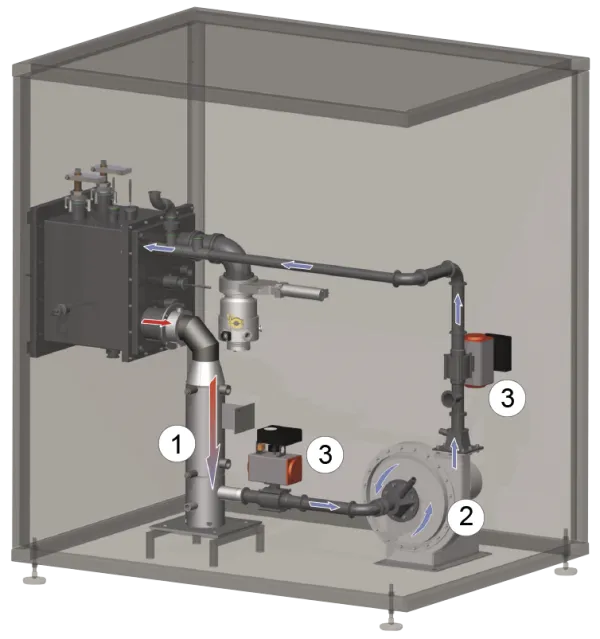
However, Nabertherm offers a direct gas rapid-cooling system for accelerated cooling. In this system, the process gas circulates at high velocity between the furnace chamber and a gas-to-water heat exchanger. Heat from the load is transferred to the circulating process gas, which is subsequently cooled in the heat exchanger before being recirculated through the chamber, significantly increasing the cooling rate.
The optimum furnace configuration depends on factors such as:
Maximum process temperature
- Process atmosphere
- Potential outgassing from the product
- Purity requirements
- Batch size and weight
- Required vacuum level
- Degree of automation
Nabertherm specialists provide expert consultation and work closely with customers to develop the most suitable furnace solution for each heat treatment process.
The process atmosphere has a significant influence on material properties and surface quality. VHT cold-wall retort furnaces enable precisely controlled atmospheres to prevent oxidation, support reduction processes, or promote targeted chemical reactions.
Yes. Thanks to their flexible configurations, precise control technology, and wide range of customization options, VHT furnaces are ideal for research projects, pilot-scale production, and materials development.
The following utilities are typically required:
- Electrical power supply
- Process gas supply
- Reliable cooling water supply
- Exhaust extraction and/or room ventilation (if required)
- Compressed air (if required)
- Additional burner gas for systems equipped with afterburning units (e.g., propane or natural gas)
- Installation space; a minimum maintenance clearance of 800 mm around the furnace is recommended
With the P570 controller, gas valves are operated manually while the controller automatically follows the programmed temperature profile. Using the free MyNabertherm app, users can monitor the furnace process remotely from virtually anywhere. With a PLC-based control system, the operator simply starts the process, and the programmed cycle is executed fully automatically.
All furnaces are built to order to ensure optimal adaptation to individual customer requirements.
A small standard furnace can typically be delivered in approximately six months, while large furnace systems with extensive customization may require up to one year. For larger order volumes, staggered delivery schedules can also be arranged.




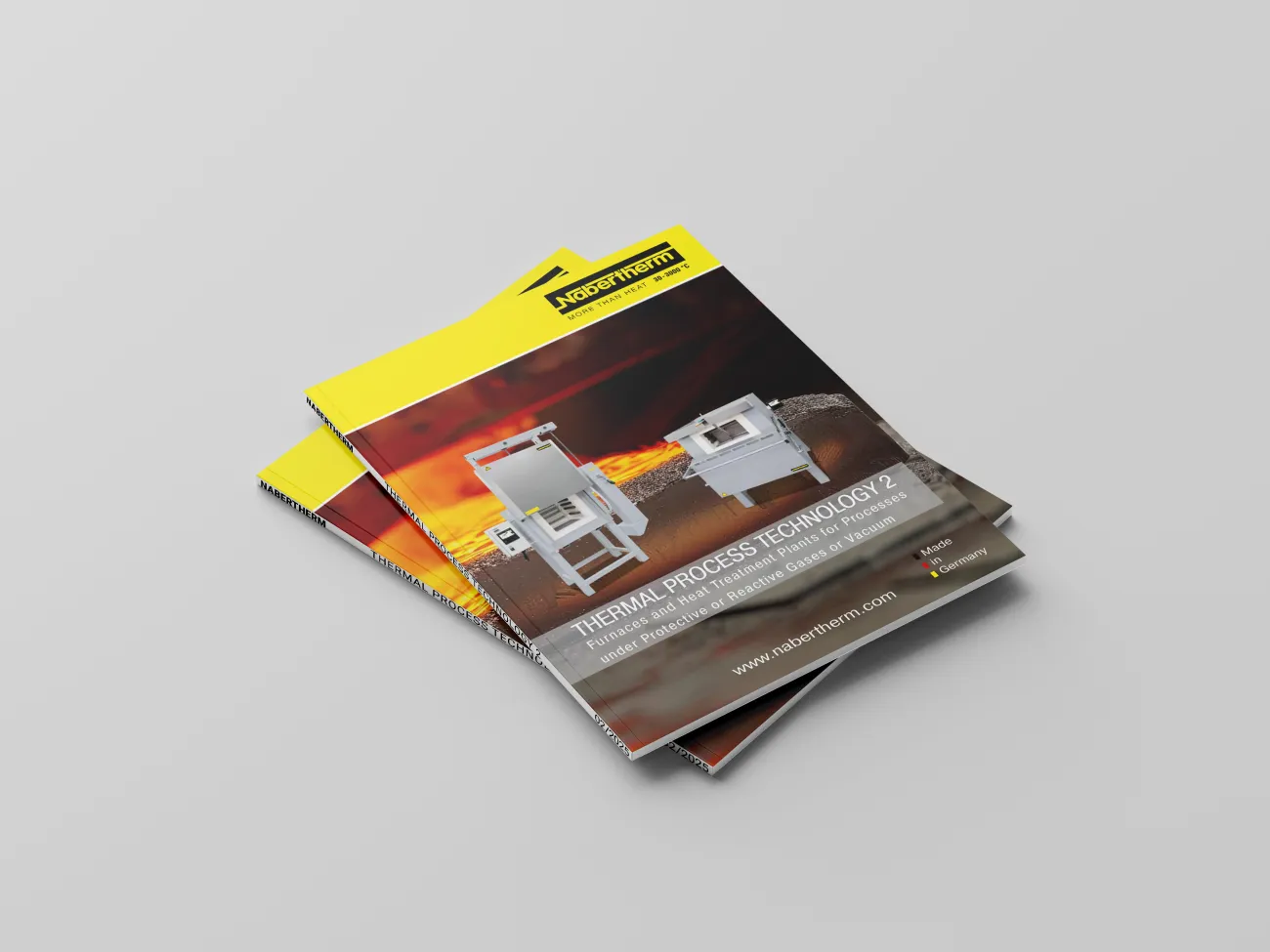
Katalogu
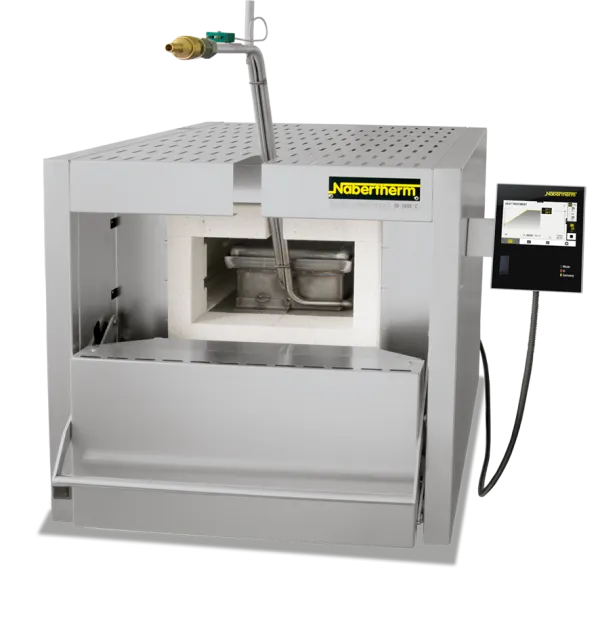
Kompletny przegląd naszej szerokiej oferty pieców i akcesoriów przeznaczonych do różnych procesów prowadzonych w atmosferze gazów reakcyjnych palnych i niepalnych, w kąpieli solnej lub w próżni można znaleźć w naszym katalogu „Technologia procesów termicznych 2”.

